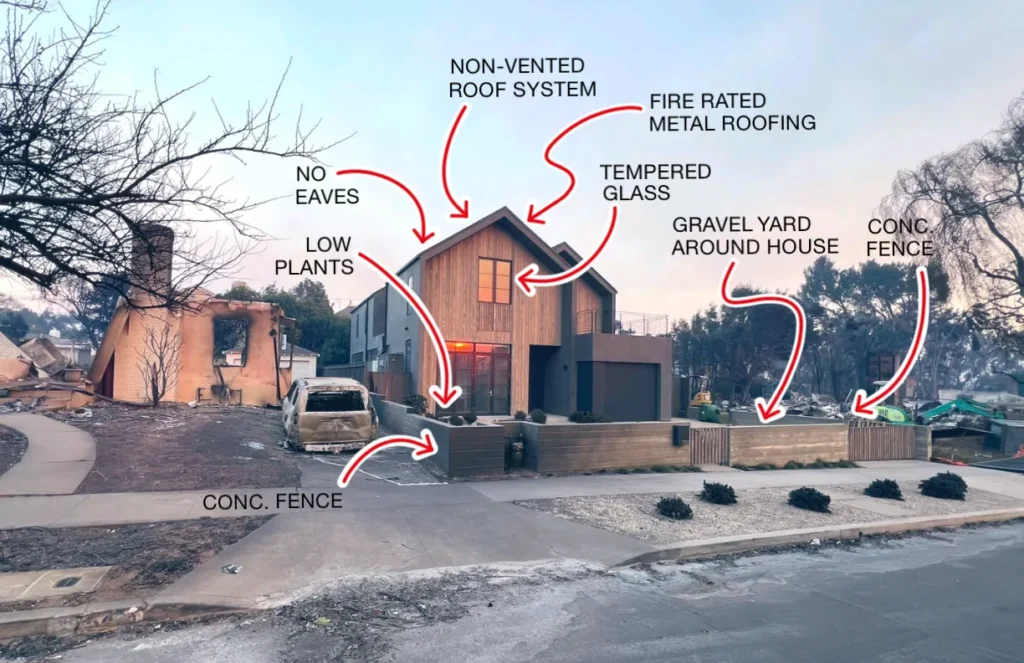
When the fires swept through LA last summer, entire neighborhoods were reduced to ash in hours. Homes that had stood for decades vanished overnight. But… one home on a windy hillside stood almost untouched. Not because it was lucky, but because it was designed to fight back. Architect Greg Chasen’s thoughtful design choices turned this house into a quiet fortress against embers, wind, and radiant heat.
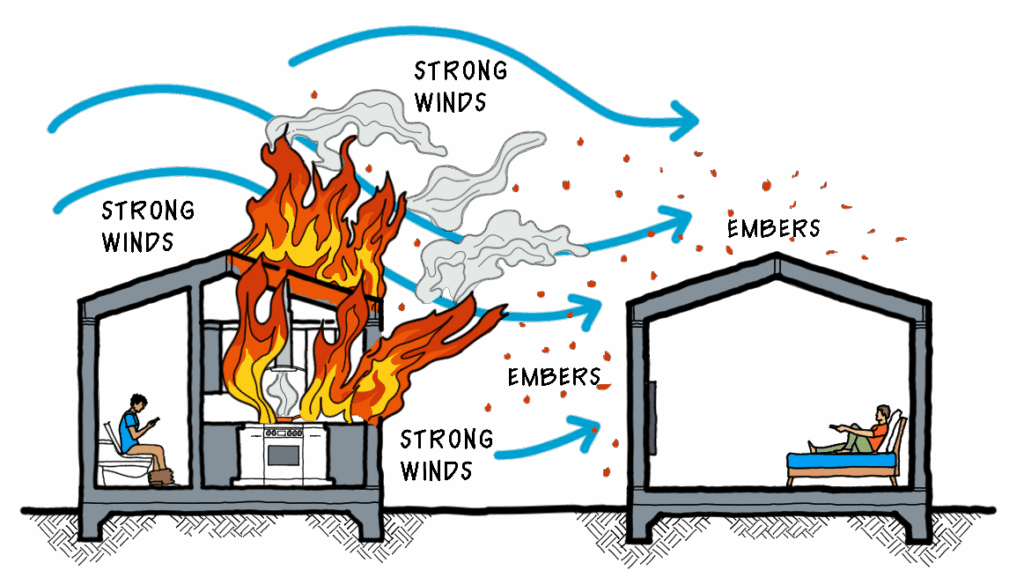
What Made The Difference
- Defensible Space: Gravel instead of grass, minimal vegetation near walls — no easy fuel for embers.
- Fire-Resistant Materials: Metal roof, tempered glass windows, concrete fencing.
- Smart Design Choices: No eaves for embers to sneak under, non-vented roofing to block their path, and fire-rated siding on every exterior wall.
When the embers flew, there was simply nothing for them to catch.
But Here’s the Twist
In the U.S., most houses are still built with wood, one of the most combustible materials there is. Why? It’s cheap and everywhere, it’s fast to build with and it’s flexible for renovations. Therefore… until codes and building practices catch up, most homeowners are still living in structures that are vulnerable to the very forces we know are coming, whether that’s wildfire, flooding, or high winds.
The Bigger Picture
Resilience isn’t just about the materials. It’s about designing with the hazards in mind:
- Choosing materials that fight back.
- Eliminating weak spots where nature can attack.
- Planning the space around your home so it doesn’t feed the danger.

Final Thought
A house can be your dream… or it can be your shield. But without smart design, it’s only one lightning strike or ember away from loss. Therefore, design for resilience first, and you can enjoy the beauty for decades to come.